4 Application—Bacterial Chemotaxis
The contents of this chapter have been published in Phys. Rev. X 13, 041017 (2023) [1].
The chemotaxis signaling network of the bacterium Escherichia coli is a sophisticated information processing system, enabling the bacterium to sense nutrient gradients and dynamically adjust its movement. The bacterium’s ability to climb chemical gradients is constrained by the mutual information rate between the sensed nutrient concentration and the phosphorylated messenger protein CheYp. A recent study by Mattingly et al. [2] used a Gaussian approximation to estimate this rate, based on the assumption that in shallow gradients the chemotactic response is approximately linear. However, the nonlinear nature of chemotaxis suggests that Gaussian methods may only approximate the true information rate. In this chapter, we apply an exact technique, Path Weight Sampling (PWS), to precisely quantify information transmission in E. coli chemotaxis and compare the results against the Gaussian approximation. We build a stochastic model based on literature data, which we use to simulate nonlinear chemotactic responses to time-dependent stimuli. Our PWS results for this model yield information rates 4–5 times higher than those obtained experimentally. While this finding can be viewed as surprisingly accurate for an ab initio prediction, the question remains whether the discrepancy is due to the limitations of the Gaussian framework used by Mattingly et al. [2] or due to the assumptions of our stochastic model. Examining the latter question reveals that our initial model underestimates both the magnitude of the response and the biochemical noise. We refined the model by changing two key parameters that describe the receptor array, namely the number of clusters and their size. This leads to information rate estimates that closely align with experimental data, indicating that the number of receptor clusters is much smaller than hitherto believed, while their size is much larger. Finally, our analysis confirms the accuracy of the Gaussian framework for studying chemotaxis in shallow gradients, validating its use by Mattingly et al. [2] a posteriori.
4.1 Introduction
The chemotaxis system of the bacterium Escherichia coli is a complex information processing system. It is responsible for detecting nutrient gradients in the cell’s environment and using that information to guide the bacterium’s movement. E. coli navigates through its environment by performing a biased random walk, successively alternating between so-called runs, during which it swims with a nearly constant speed, and tumbles, during which it randomly chooses a new direction [3]. By adaptively varying the tumbling probability and thus adjusting the relative duration of runs and tumbles, the bacterium is able to climb a chemical gradient.
Recently, Mattingly et al. [2] found that the ability of the bacterium to climb chemical gradients is fundamentally limited by the information it can acquire via its receptors. However, to calculate the information rate from their experimental data, they relied on a Gaussian approximation which assumes linear Gaussian statistics for the trajectories. The use of the approximation is justified by the argument that in shallow concentration gradients the behavior of the chemotaxis network is approximately linear. Nevertheless, it is well known that chemotaxis generally exhibits a highly nonlinear response, which suggests limitations to the Gaussian framework’s accuracy in capturing the full dynamics of the system. Moreover, we have seen in the previous chapter that the Gaussian approximation may fail in surprising ways.
In this chapter, we use Path Weight Sampling (PWS) to exactly quantify information transmission in E. coli chemotaxis, and to assess the accuracy of the Gaussian approximation. To study information transmission in E. coli chemotaxis using PWS, we first develop a stochastic model of the biochemical chemotaxis network based on the MWC model for receptor cooperativity [4–6]. This model accurately describes the nonlinear behavior of the chemotaxis network and allows us to simulate the chemotactic response to an arbitrary time-dependent stimulus. Furthermore, we can use PWS to compute the mutual information rate between arbitrary input signals and the response signal generated by the model. To obtain realistic time-dependent input signals, we assume a cell performing a random walk in a static exponential gradient, following Mattingly et al. [2]. By using the same input dynamics as those in Ref. [2], we can rigorously compare our results against the experiments.
One of our principal findings is that the information transmission rate computed by PWS for the model based on the literature data—which we refer to as the “literature-based model”—is approximately 4–5 times higher than the rate measured experimentally by Mattingly et al. [2]. Given that this model relies entirely on available literature data without any fitting to the results of Mattingly et al. [2], an agreement within a factor of 4–5 is perhaps unexpectedly good. Still, the source of the discrepancy remains unclear: does it stem from the inaccuracy of the Gaussian framework used by Mattingly et al. [2] or from the inaccuracy of our literature-based model?
To address this question, we examined the data of Mattingly et al. [2] on the response and the noise amplitude. We found that the literature-based model underestimates not only the response strength but also the noise. By fitting the response kernel and the noise correlation function, we developed a “fitted model” in which receptor clusters are larger, enhancing the response amplitude, but significantly fewer in number, leading to much greater noise and thus a lower information transmission rate. Recomputing the information rate with PWS for this model, fitted to the linear response and the noise, yielded close agreement with the information rate measurements of Mattingly et al. [2], suggesting that the receptor array composition differs substantially from previous assumptions. In particular, while the predicted cluster size is about a factor of 2 larger than previous estimates, the number of clusters is about tenfold lower. Lastly, we found that the Gaussian framework is highly accurate in the regime of shallow gradients as studied by Mattingly et al. [2], thus verifying their Gaussian approach a posteriori.
In Section 4.2 we describe the dynamics of the input signal. Section 4.3 introduces the stochastic model of the chemotaxis system that we developed based on available literature. In Section 4.4 we describe the Gaussian approximation used by Mattingly et al. [2] to compute the information transmission rate and in Section 4.5 we present the results. We conclude with a discussion of our findings, particularly regarding the number of clusters and their size.
4.2 Stochastic Dynamics of the Input Signal for Chemotaxis
The information transmission rate depends not only on the biochemical chemotaxis network, but also on the dynamics of the input signal. It is therefore important that the dynamics of this signal in our model agree with those in the experiments of Mattingly et al. [2]. For these experiments the input signal is the time-dependent ligand concentration that is experienced by the swimming bacterium.
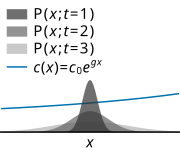
We consider an Escherichia coli bacterium that swims in a static nutrient concentration gradient . Following Mattingly et al. [2], the gradient is exponential: with steepness . In a shallow gradient, the speed of E. coli along the gradient axis can be considered as a stochastic process that fluctuates around the net chemotactic drift velocity. Following Mattingly et al. [2], we assume that in a shallow gradient the bacterial swimming dynamics are, to a good approximation, the same as they are in the absence of a gradient. Their experimental evidence shows that the velocity fluctuations in absence of a gradient are described by an exponentially decaying auto-correlation function:
Therefore, in a shallow gradient, the gradient-climbing speed can be modeled as a zero-mean Ornstein-Uhlenbeck process
where , and is white noise with . The -position of the bacterium is given by the integral of the velocity, i.e., . Thus, when projected onto the gradient axis, the bacterium performs a 1D random walk described by the Langevin equation
Since the bacterium moves in a static concentration gradient described by , the concentration dynamics that the cell observes are generated directly from its own movement dynamics, see Fig. . At time the cell is at position and thus measures the concentration . We find the stochastic dynamics of by differentiating using the chain rule
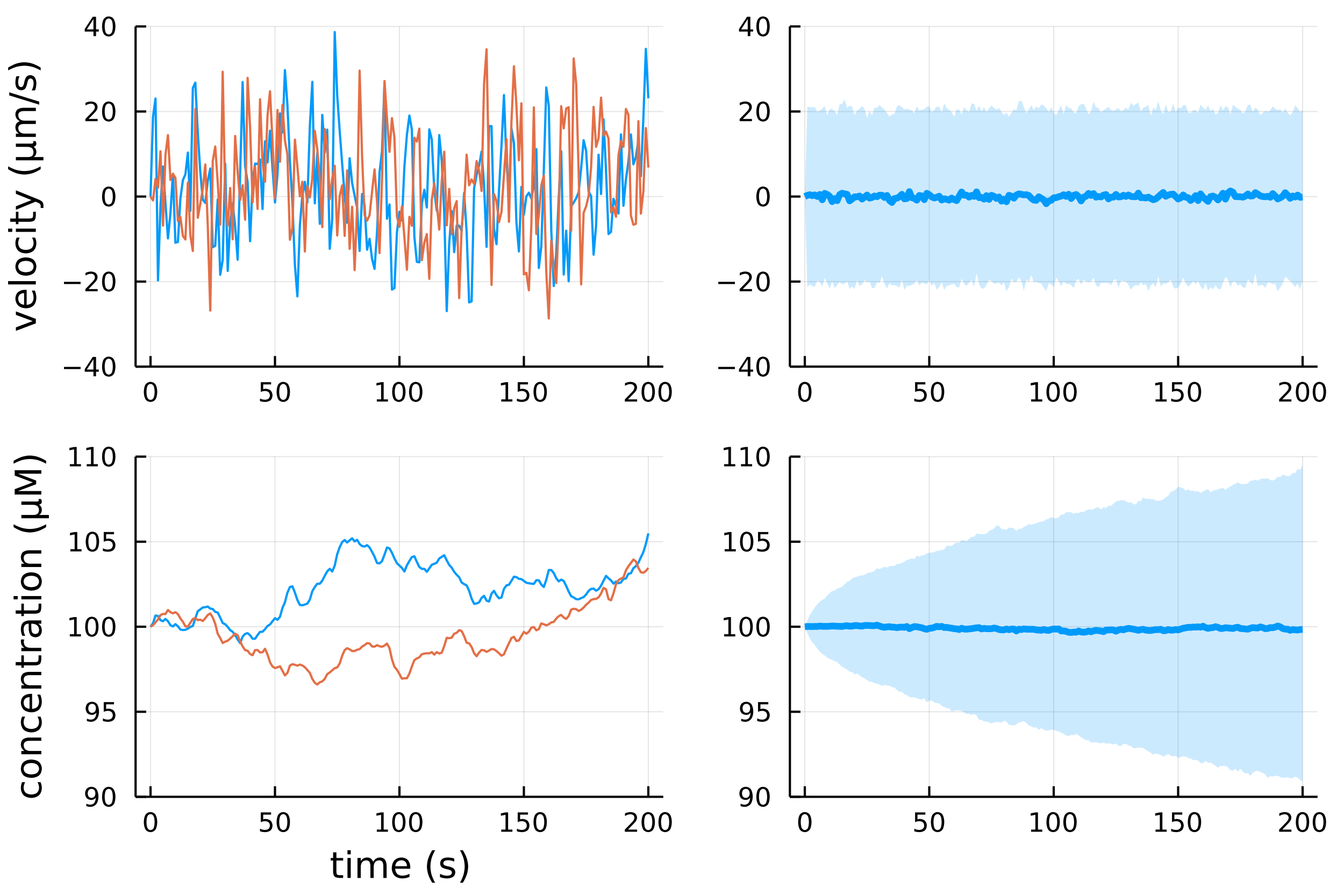
The concentration dynamics are thus fully determined by the stochastic dynamics of the cell’s swimming velocity in the absence of a gradient and by the shape of the concentration gradient . The resulting stochastic dynamics are visualized in Figure 4.1.
In the PWS simulations we use directly as the input to our system. Yet, for the Gaussian approximation, to which we will compare the PWS result, we need to use a different input signal because the chemotaxis system does not respond linearly to . Instead, Mattingly et al. [2] show that the chemotaxis system responds approximately linear to an input defined by
The correlation function of is given by
The power spectral density of this signal is given by the Fourier transform of its correlation function:
We use this same input below in Section 4.4 to compute the Gaussian approximation of the mutual information rate. As discussed in more detail in the main text, we note that the mutual information between the output and the input trajectory , as measured in the PWS simulations, is identical to that between the output and the input trajectory , as computed in the Gaussian model because of the deterministic and monotonic mapping between and .
4.3 Stochastic Chemotaxis Model
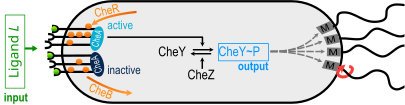
We apply PWS to a stochastic model of the chemotaxis network that describes individual reactions via a master equation. In this model, the receptors are grouped in clusters. Each receptor can switch between an active and an inactive conformational state, but, in the spirit of the Monod-Wyman-Changeux model [4], the energetic cost of having two different conformations in the same cluster is prohibitively large. We can then speak of each cluster as either being active or inactive. Each receptor in a cluster can bind ligand and be (de)methylated, which, together, control the probability that the cluster is active. In the simulations, receptor (de)methylation is modeled explicitly, because the (de)methylation reactions are slow. In contrast, the timescale of receptor-ligand (un)binding is much faster than the other timescales in the system, i.e., those of the input dynamics, CheY (de)phosphorylation, and receptor (de)methylation. The receptor-ligand binding dynamics can therefore be integrated out without affecting information transmission, in order to avoid wasting CPU time. In addition, the receptor clusters can phosphorylate CheY, while phosphorylated CheY is dephosphorylated at a constant rate. The dynamics of the kinase CheA and the phosphatase CheZ which drive (de)phosphorylation are not modeled explicitly. Figure 4.2 shows a depiction of the bacterial chemotaxis network.
Table Table 4.1 shows the parameter values of our chemotaxis model, which are all based on values reported in the literature. For what follows below, the key parameters are the number of receptors per cluster, which is taken to be based on Refs. [7,8], while the number of clusters is , where is an estimate for the total number of receptors based on Ref. [9]. These are the numbers of the “literature-based model”. The key parameters, the number of clusters and their size, change in the “fitted model”, which is based on fitting the response kernel and noise correlation function to the data of Mattingly et al. [2].
| parameter | value | description | |
|---|---|---|---|
| 157.1 | μm²/s² | variance of up-gradient velocity [2] | |
| 0.86 | s⁻¹ | velocity correlation decay constant [2] | |
| 100 | μM | mean ligand concentration [2] | |
| 6 | number of receptor units per cluster [7] | ||
| 400 | number of receptor clusters [9] | ||
| 4 | number of methylation sites per receptor [7] | ||
| 10 000 | total copy number of CheY proteins (phosphorylated and unphosphorylated) [9] | ||
| 2900 | μM | ligand dissociation constant of active receptors [8] | |
| 18 | μM | ligand dissociation constant of inactive receptors [8] | |
| 0.1 | s⁻¹ | methylation rate [2,7] | |
| 0.2 | s⁻¹ | demethylation rate [2,7] | |
| 0.015 | s⁻¹ | phosphorylation rate [10,11] | |
| 10.0 | s⁻¹ | dephosphorylation rate [10,11] | |
| 0.17 | steady-state fraction of phosphorylated CheY [10] | ||
| 0.5 | receptor methylation level without ligands [7] | ||
| -2.0 | free energy change of active conformation from attachment of one methyl group [7] |
4.3.1 MWC Model
In our model, each cluster consists of receptors. report a typical value for the cluster size of . Detailed balance requires that the ligand binding affinity depends on whether a cluster is in the active or inactive state. Consequently, we have a dissociation constant for a ligand bound to an active receptor and another dissociation constant for a ligand bound to an inactive receptor. For chemotaxis, , i.e. the ligand binding affinity is higher for the inactive state.
Additionally, each receptor monomer has methylation sites that can affect its conformation and therefore the kinase activity. The aspartate receptor Tar has methylation sites [7]. We model the receptors’ methylation dynamics such that CheB only demethylates active receptors while CheR only methylates inactive receptors, following previous models for chemotaxis [5,12]. This approach represents arguably the simplest way to model methylation with exact receptor adaptation.
In an environment with ligand concentration , the probability of a receptor cluster with methylated sites to be active, , is determined by the free-energy difference between the active and inactive receptor states
where
Here, the number of methylated sites of a cluster (not receptor) is denoted by , ranging from to . The parameters are again taken from Shimizu et al. [7]. Their experimental results indicate that . Kamino et al. [8] report ligand dissociation constants of for active receptors and for inactive Tar receptors (for MeASP). Note that in the equations we assume units such that .
The dynamics of methylation in our model are described by the following mean-field equation
The system reaches a steady state for the adapted activity where
The steady-state methylation can be obtained from Equation 4.8, Equation 4.9 by solving :
To characterize the methylation timescale, we linearize the dynamics of around the steady state (at constant ligand concentration ). To first order, we can write
where is the characteristic timescale of the methylation dynamics. We find by expanding [Equation 4.8] around :
and then plugging this first-order expansion into Equation 4.10 to get
By comparing with Equation 4.13 we find that for small perturbations, the timescale for methylation to approach steady state is given by
Thus, the parameters and determine two important characteristics of the methylation system: the adapted activity and the methylation time scale . Shimizu et al. [7] report an adapted activity of and based on experimental data [2,7] we assume a methylation time scale of . Our parameter choice, which is consistent with both of these observations, is and .
CheY is phosphorylated by CheA, the receptor-associated kinase. The kinase activity is directly linked to the activity of a receptor cluster. Therefore, we assume that CheY is phosphorylated by active receptor clusters. Dephosphorylation of CheY-p is catalyzed by the phosphatase CheZ, which we assume to be present at a constant concentration. The CheZ-catalyzed dephosphorylation rate was reported to be for attractant response and for repellent response [11]. Based on this data, we use the approximate dephosphorylation rate in our model. In the fully adapted state the fraction of active receptors is and therefore the mean fraction of phosphorylated CheY, , is given by
In the fully adapted state the phosphorylated fraction was found to be [10]. Hence, we infer a phosphorylation rate of for the literature-based model. Accordingly, for the “fitted model”, based on fitting and to those measured by Mattingly et al. [2], we use a larger phosphorylation rate due to the smaller number of clusters .
4.3.2 Reaction Kinetics
Since the timescale of conformational switching of active and inactive receptors and ligand binding is much faster [13] than the timescale of phosphorylation or methylation, we don’t explicitly model ligand (un)binding and conformational switching. Each cluster is characterized by its methylation state . This ranges from 0 to the total number of methylation sites, which equals the number of sites per receptor times the number of receptors per cluster . In our Gillespie simulation, each possible state of a cluster is its own species, i.e., we have species for . Overall, our chemotaxis model consists of four types of reactions that describe (a) the methylation of a receptor , (b) the demethylation of a receptor , (c) the phosphorylation of CheY , and (d) the single dephosphorylation reaction . Thus, due to the combinatorial explosion of receptor states, the system has a total number of elementary reactions (which amounts to 75 reactions in the literature-based model and 182 reactions in the fitted model).
The ligand-concentration dependent methylation rate for is given by
The term is needed because only inactive receptors can be methylated. The demethylation rate for is given by
where only active receptors can be demethylated. These zero-order dynamics of (de)methylation of receptors lead to the adaptive behavior of the chemotaxis system as described above.
Only active receptors can phosphorylate the CheY protein using the receptor-associated kinase CheA. We therefore model phosphorylation as a reaction with rate
where is a constant that represents the phosphorylation rate of an active cluster. The dephosphorylation is carried out by the phosphatase CheZ at a constant rate .
4.4 Mutual Information Rate for the Chemotaxis System in the Gaussian Approximation
To test the validity of the Gaussian approach used by Mattingly et al. [2], we also compared the exact PWS results for our discrete, stochastic model to the prediction of the Gaussian approximation for this same model. In continuous time, the information transmission rate of a Gaussian system in steady state can be computed exactly from the power spectral density functions of the system [14]:
Here, the power spectral density is defined as
where denote the stationary (cross-)correlation functions of the system.
Thus, we need to obtain the (cross-)correlation functions to compute the information rate in the Gaussian framework. In their experiments with E. coli bacteria, Mattingly et al. [2] don’t obtain these correlation functions directly, however. Instead, they obtain three kernels, , and , from which the correlation functions can be inferred. We follow this approach for calculating the Gaussian information transmission rate.
4.4.1 Computing the Gaussian information rate using linear response kernels V(t), K(t), and N(t)
denotes the autocorrelation function of the swimming velocity of bacteria, i.e., . As explained in Section 4.2, the swimming dynamics of the bacteria determine the statistics of the input signal , where is the ligand concentration as experienced by the bacterium and is the gradient steepness. The input signal correlation function, denoted by , can then be expressed as
The response kernel, denoted by , represents the time evolution of the average activity of the receptors in response to an instantaneous step change in the input concentration. More precisely, is defined as
where we assume the input concentration jumps instantaneously from to at time . is the Heaviside step function. Note that because the signal is defined as the time-derivative of the concentration , a step-change in corresponds to a delta impulse in . Thus, describes the deterministic dynamics of the system after being subjected to a delta stimulus , making the Green’s function of the system. The activity resulting from arbitrary time-dependent signal can be written as a convolution of with
where is the receptor activity noise. We define the response . Assuming the input statistics are stationary and described by the correlation function , it is easy to show that the cross-correlation between and is given by
In other words, the cross-correlation between and is given by the convolution of the response kernel with the input correlation function.
The noise kernel describes the autocorrelation of the activity fluctuations in the absence of an input stimulus. In particular, .
We now rewrite Equation 4.21 for the mutual information rate in terms of the three kernels described above. We express the power spectra in terms of the Fourier-transformed kernels , , and . In Section 4.2 we already showed that . The cross power spectrum is given by which follows from Equation 4.26. Finally, from Ref. [14] we use the identity to express the output power spectrum. We insert these expressions into Equation 4.21 which yields
Then, for shallow gradients, we can make a Taylor approximation in to obtain
This result shows that the information rate in shallow gradients is proportional to and the proportionality constant is determined by the measured kernels. Mattingly et al. [2] obtain the relevant kernels , , and from experiments by fitting phenomenological models to their single-cell data. We obtain the kernels from the simulation outputs of our stochastic chemotaxis model.
4.4.2 Estimating the kernels from simulations
4.4.2.1 Response Kernel K(t)
To compute the response kernel from simulations of our model, we study how the system responds to a sudden increase in ligand concentration. First, we allow the system to reach steady state by adapting it to an initial ligand concentration of for . At time , we instantaneously increase the concentration by 10% to . We then record the system’s response over the next 200 s, sampling at intervals of 0.01 s.
Rather than directly obtaining the receptor activity from the simulations, we follow the experimental approach of inferring the receptor activity from the phosphorylated CheY levels. Specifically, we record the fraction between phosphorylated and unphosphorylated CheY. Since the copy number of CheY is relatively large, this fraction serves as a good proxy for the activity . We relate the to the activity via the expression
where and are the phosphorylation and dephosphorylation rate, respectively, and is the number of receptor clusters.
Finally, we estimate the response Kernel by averaging the changes in measured activity over simulated trajectories
4.4.2.2 Output Noise Kernel N(t)
We can similarly obtain the noise statistics of the output from simulations of our chemotaxis model. In this case, we stochastically evolve the chemotaxis model at constant ligand concentration for a very long time of 1 × 10⁴ s. The result is a time trace of the activity , which we again obtain from the fraction using Equation 4.29. We discretize this time trace at a resolution of 0.01 s. This results in a time series where . To estimate the correlations in the time series we subtract the overall average activity from each data point and thus obtain the data vector where . From we estimate the auto-correlation function of the activity. To obtain precise results we average the correlation function for trajectories.
4.4.2.3 Obtaining the Fourier Kernels using the FFT
To compute the Gaussian information rate, we need the frequency-space representations of the kernels , , and . We already derived the analytical form of in Section 4.2. We obtain and numerically via a discrete Fourier transform of the corresponding time-domain kernel.
As explained above, we compute time-discretized kernels and from time traces obtained via stochastic simulations of our model. We sample these functions at the instants , the sampling frequency being . Then, we use the discrete Fourier transform (DFT) to obtain approximations for and as follows. The DFT coefficients are given by
where . These DFT coefficients can be computed efficiently using the Fast Fourier Transform (FFT) algorithm. The DFT provides point estimates for the Fourier-domain kernel at discrete frequencies
i.e., . This approximation introduces some level of error, known as spectral leakage, due to the finite duration and sampling of the signal. This error can be reduced by multiplying the time-domain kernel with a window function. Thus, before computing the DFT, we multiply the kernel with a Hanning window, which is a smooth function that tapers at the edges of the kernel, reducing the effect of discontinuities at the beginning and end of the time series. The Hanning window is defined as:
The windowed kernel is obtained by multiplying the time-domain kernel with the Hanning window :
Using the FFT algorithm we then compute the DFT coefficients of the windowed kernel.
The procedure described above to obtain the DFT coefficients from is also applied to to obtain the coefficients .
We can then evaluate the information rate using Equation 4.28 by discretizing the integral with . More precisely, we compute the Gaussian information rate as
4.5 Results
We first asked whether our chemotaxis model based on the current literature can reproduce the information transmission rate as recently measured by Mattingly et al. [2]. In what follows, we call this model the “literature-based” model.
4.5.1 Discrepancy between experimental results and literature-based model
In our model, the output is the concentration of phosphorylated CheY, while in the experiments of Mattingly et al. [2] it is the average activity of the receptor clusters as obtained via FRET measurements. We argue that this difference does not significantly affect the obtained information rates, and thus, that it is valid to compare our results to the experiments. In particular, since the copy number of CheY is much larger than the number of receptor clusters, the fluctuations in CheY are dominated by the extrinsic fluctuations coming from the receptor activity noise rather than from the intrinsic fluctuations associated with CheY (de)phosphorylation. To a good approximation, the copy number of phosphorylated CheY, , is thus a deterministic function of the average receptor activity . Mathematically, the mutual information between two stochastic variables and is the same as the mutual information for deterministic and monotonic functions and . It follows that the mutual information between and , is nearly the same as that between and the receptor activity . It is therefore meaningful to compare the information transmission rates as predicted by our PWS simulations to those measured by Mattingly et al. [2].
We use RR-PWS to compute the mutual information for the literature-based model. Specifically, we measure the mutual information between the input trajectory of the ligand concentration and the output trajectory of phosphorylated CheY, , and where each trajectory is of duration . With RR-PWS it is possible to compute for all within a single PWS simulation of duration by saving intermediate results after each sampled segment, see Section 3.3. The receptor states are considered hidden internal states, and we use the technique described in Section 2.3 to integrate them out.
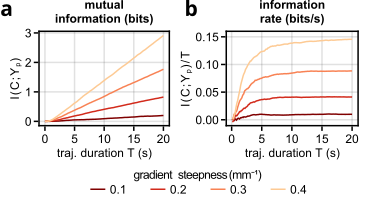
Figure 4.3a shows the PWS estimate of the information transmission rate for cells swimming in gradients of different steepnesses . The information transmission rate is obtained from the PWS estimate of the trajectory mutual information , different trajectory durations . As seen in Figure 4.3b, for short trajectories the mutual information increases non-linearly with trajectory duration , but in the long-duration limit the slope becomes constant. This asymptotic rate of increase of the mutual information with is the desired information transmission rate . The precise definition is given by
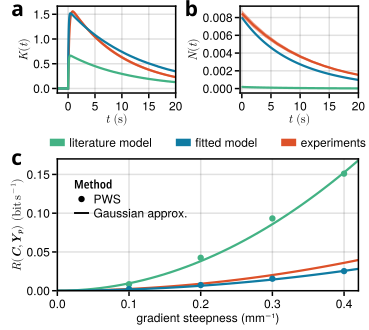
We then compared our results for the information transmission rate of the literature-based model to those of Mattingly et al. [2]. Figure 4.4c shows that the model predictions differ from the experiments by a factor of . Despite this discrepancy, we believe that the agreement between experiment and theory is, in fact, remarkable, because these predictions were made ab initio: the model was developed based on the existing literature and we did not fit our model to the data of Mattingly et al. [2]
Yet, the question about the origin of the discrepancy remains. The difference between their measurements and our predictions could be attributed either to the inaccuracy of our model or to the approximation that Mattingly et al. [2] had to employ to compute the information transmission rate from experimental data. Concerning the latter hypothesis, due to the curse of dimensionality and experimental constraints, Mattingly et al. [2] could not directly obtain the information transmission rate from measured time traces of the input and output of the system. Instead, they measured three different kernels that describe the system in the linear regime. Specifically, they obtained the response of the kinase activity to a step-change in input signal, the autocorrelation function of the input signal , and the autocorrelation of the kinase activity in a constant background concentration. Then they used a Gaussian model to compute the information transmission rate from these measured functions , , and [2,14] (see also Section 4.4). This Gaussian model is based on a linear noise assumption and cannot perfectly capture the true non-linear dynamics of the biochemical network. This could be the cause for the observed discrepancies in the information rate. We have indeed already seen in Chapter 3 that there can be substantial differences between exact computations and the Gaussian approximation for the trajectory mutual information.
4.5.2 Revising the literature-based model
To uncover the reason for the discrepancy we first tested whether our literature-based model reproduces the experimentally measured kernels. If the kernels do not match, then, clearly, the discrepancy in the information rate may be caused by the difference between our model and the experimental system, as opposed to the inaccuracy of the Gaussian framework. Our input correlation function, , is, by construction, the same as that of Mattingly et al. [2]. The simulation protocol we used for measuring the other kernels was directly modeled after the experimental protocol [2].
We find that the response kernel and the autocorrelation function of the noise of our system are different. Figure 4.4a, b shows that our model reproduces the timescales of and as measured experimentally. This is perhaps not surprising, because the decay of both and is set by the (de)methylation rate, which has been well-characterized experimentally. Yet, the figure also shows that our model significantly underestimates the amplitudes of both and .
This raises the question of whether other parameter values would allow our model to better reproduce the measured kernels and , and, secondly, whether this would resolve the discrepancy in information rate between our simulations and the experiments.
The amplitude of the output noise correlation function is bounded by the number of receptor clusters . In particular, the variance of the receptor activity is , where is the variance of the activity of a single receptor cluster. Comparing this bound to the measured receptor noise strength reveals that needs to be much smaller than our original model assumes: the number of clusters needs to be as small as . Indeed, Figure 4.4b shows that with , our model quantitatively fits the correlation function of the receptor activity in a constant background concentration, as measured experimentally [2].
The amplitude of , i.e. the gain, depends on the ratio of the dissociation constants of the receptor for ligand binding in its active or inactive state, respectively, as well as on the number of receptors per cluster, . Both dissociation constants have been well characterized experimentally [7,15], but the number of receptors per cluster has only been inferred indirectly from experiments [7,8]. The higher gain as measured experimentally by Mattingly et al. [2] indicates that is larger than assumed in our model: with our model can quantitatively fit (Figure 4.4a).
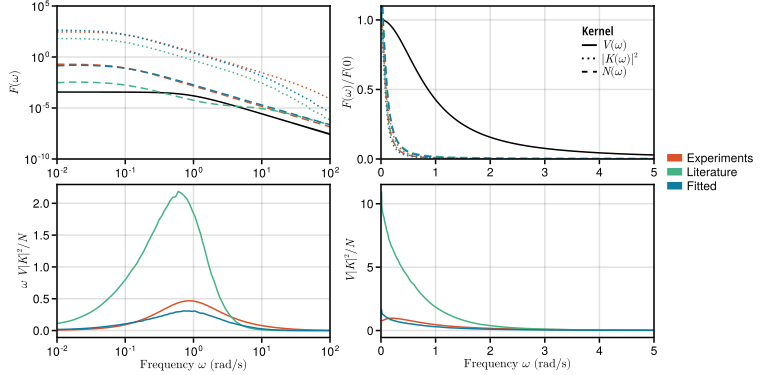
We thus find that by reducing the number of clusters from to while simultaneously increasing their size from to , our model is able to quantitatively fit both and [2], see Figure 4.4 and Figure 4.5 for their Fourier representations. This suggests that the number of independent receptor clusters is smaller than hitherto believed, while their size is larger.
4.5.3 Comparing the chemotaxis information rate of the models against experiments
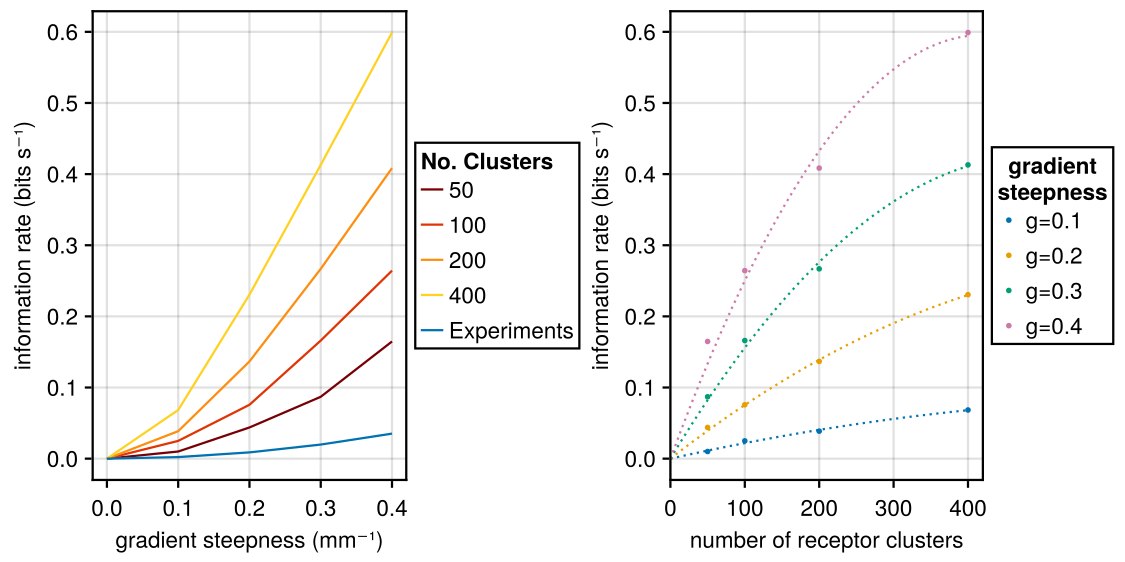
How accurately can our revised model reproduce the measured information rate, and how accurate is the Gaussian framework for the experimental system in the regime studied by Mattingly et al. [2]? In the revised model, called the “fitted model”, with and , all key quantities for computing the information transmission rate within the Gaussian framework, , and , are nearly identical to the experiments of Mattingly et al. [2], see Figure 4.4. Within the Gaussian framework (see Section 4.4), the information transmission rate in our model is thus expected to be very similar to the experimentally measured one, and Figure 4.4c shows that this is indeed the case. To quantify the accuracy of the Gaussian framework, we then recomputed the information transmission rate for the revised model, using exact PWS. We found that the result matches the Gaussian prediction very well. For these shallow and static chemical gradients, the Gaussian model is thus highly accurate. Our analysis validates a posteriori the Gaussian framework adopted by Mattingly et al. [2].
4.6 Discussion
The application of PWS to the bacterial chemotaxis system shows how crucial it is to have a simulation technique that is exact. Without the latter it would be impossible to determine whether the difference between our predictions and the Mattingly data [2] is due to the inaccuracy of the model, the inaccuracy of the numerical technique to simulate the model, or the approximations used by Mattingly and coworkers in analyzing the data. In contrast, because PWS is exact, we knew the difference between theory and experiment is either due to the inaccuracy of the model or the approximations used to analyze the data. By then employing the same Gaussian framework to analyze the behavior of the model and the experimental system, we were able to establish that the difference is due to the inaccuracy of our original model.
Our analysis indicates that the size of the receptor clusters in the E. coli chemotaxis system, , is larger than that based on previous estimates, [7,8,16]. The early estimates of the cluster size were based on bulk dose-response measurements with a relatively slow ligand exchange, yielding [7,16]. More recent dose-response measurements, at the single cell level and with faster ligand exchange, yield an average that is higher, , and with a broad distribution around it, arising from cell-to-cell variability [8]. Our estimate, , based on fitting the response kernel to that measured by Mattingly et al. [2], therefore appears reasonable. At the same time, the number of clusters, obtained by fitting the noise correlation function to the data of Mattingly et al. [2] is surprisingly low, , given the total number of receptors, [9]. Interestingly, recent experiments indicate that the receptor array is poised near the critical point [17], where receptor switching becomes correlated over large distances. This effectively partitions receptors into a few large domains, which may explain our fitted values for and .
It has been suggested that information processing systems are positioned close to a critical point to maximize information transmission [18,19], although it has been argued that the sensing error of the E. coli chemotaxis system is minimized for independent receptors [20]. Mattingly et al. [2] have demonstrated that the chemotactic drift speed in shallow exponential gradients is limited by the information transmission rate [2], but whether the system has been optimized for information transmission, and how the latter affects chemotactic performance in other spatio-temporal concentration profiles, remain interesting questions for future work.